Successful Conclusion of GNCHR’s International Conference on “Human Rights and Artificial Intelligence”

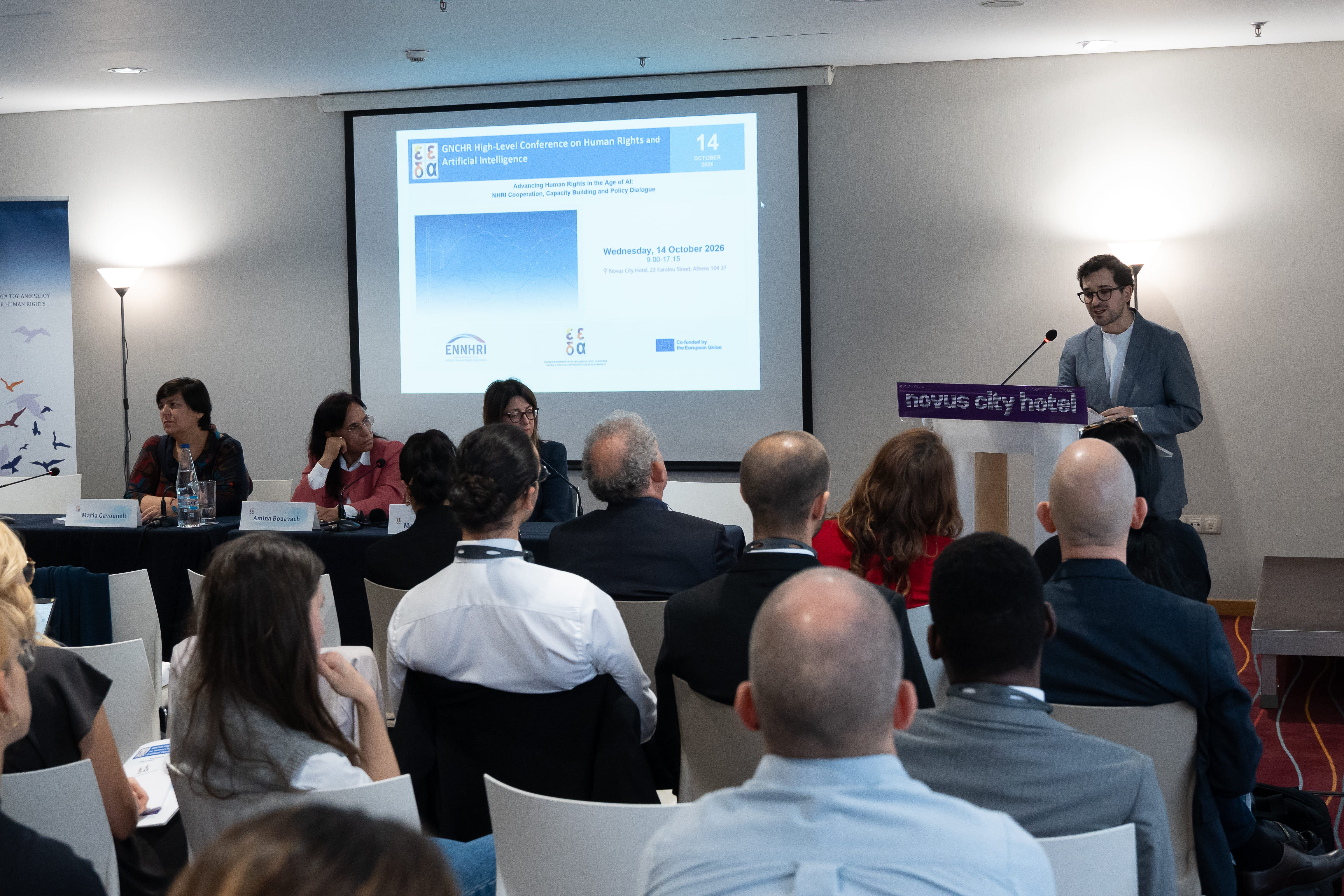
The Conference of the Greek National Commission for Human Rights (GNCHR) on “Human Rights and Artificial Intelligence”, held in Athens on Wednesday, 14 October 2026, concluded successfully, with broad participation by representatives of National Human Rights Institutions (NHRIs) from 25 European countries. The event was attended by representatives of the State, the academic community, international organisations, independent authorities, research institutions and civil society.
The Conference presented the GNCHR Reference Report on Human Rights and Artificial Intelligence, which seeks to provide a first coherent framework for analysing the relationship between artificial intelligence and human rights in Greece. The Report maps the principal international, European and domestic instruments forming the emerging regulatory landscape, identifies AI’s key prospects and challenges across critical areas of public policy and examines the fundamental principles that should govern the development and deployment of relevant AI systems. Particular emphasis is placed on the implications of AI for work, health, gender equality, children’s rights, disability, migration and asylum, public administration and the democratic functioning of institutions.
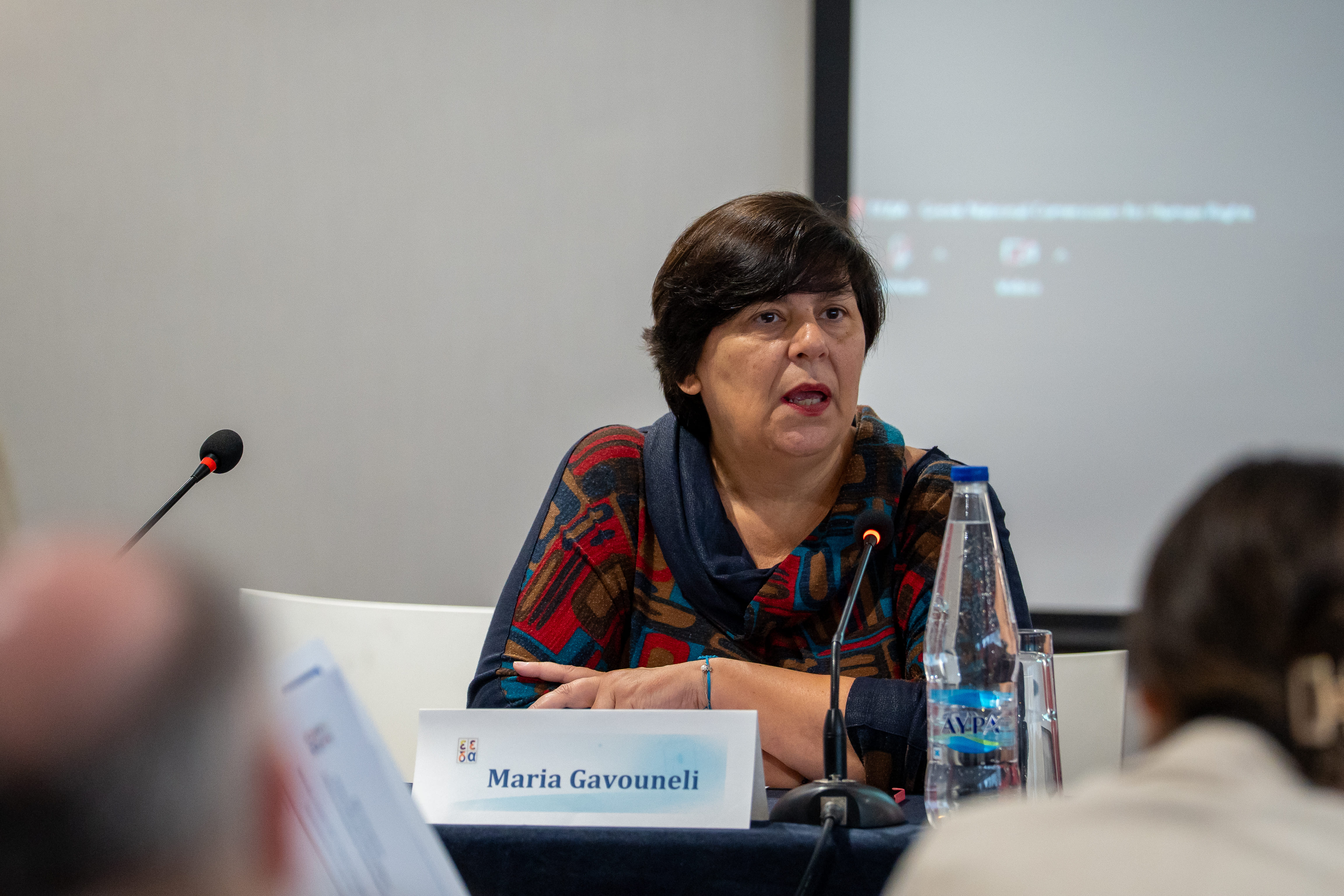
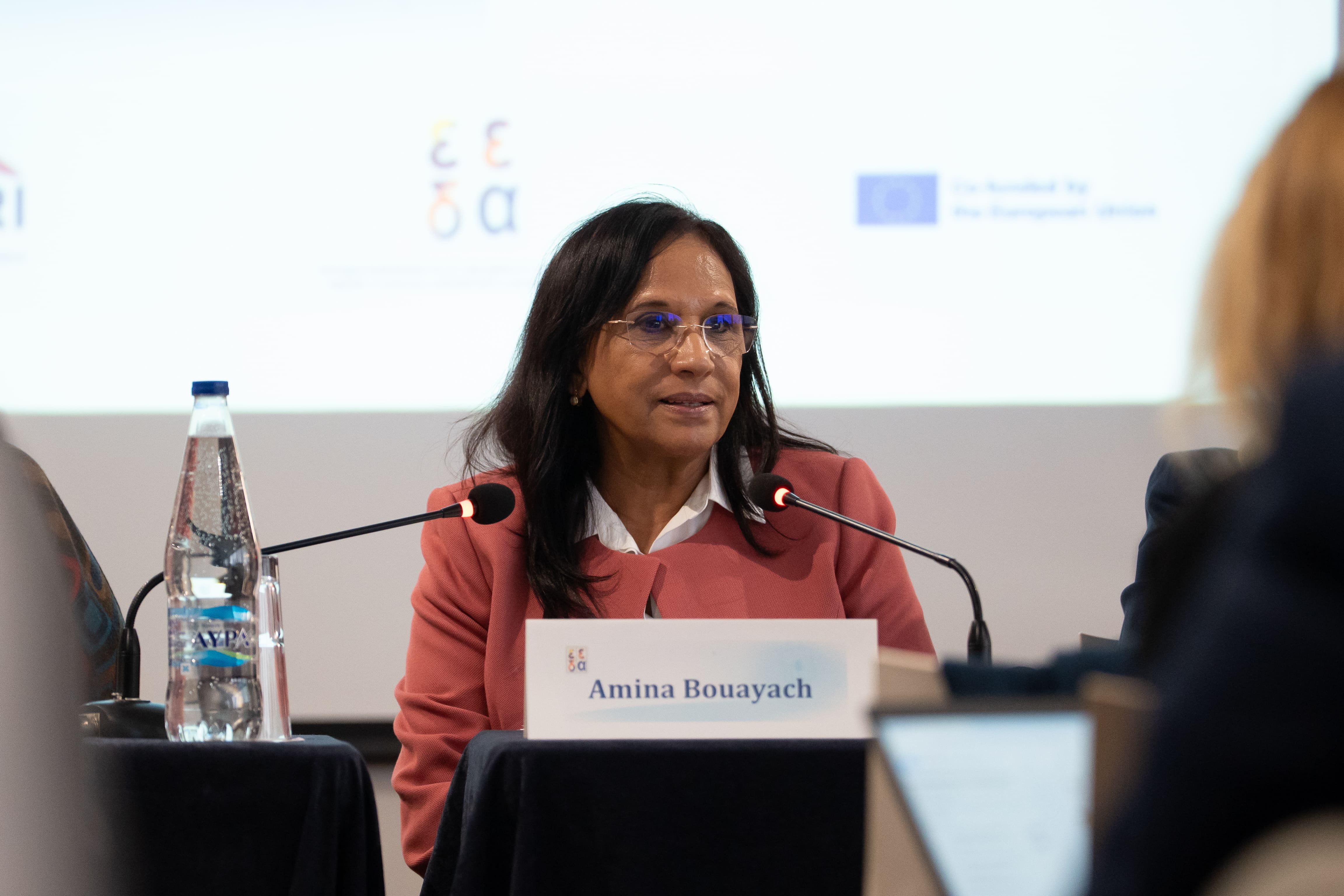
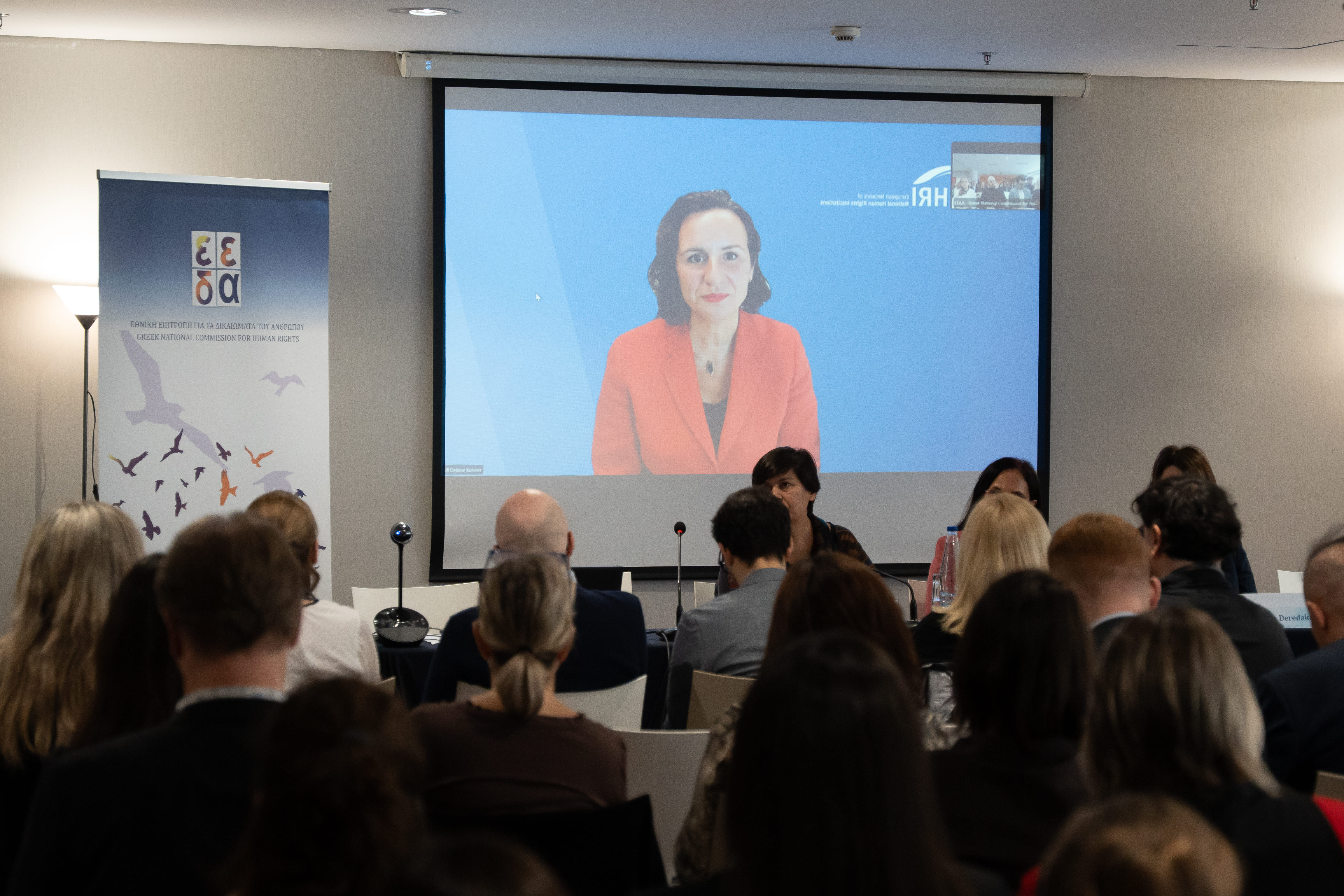
The Conference opened with an address by the President of the GNCHR, Professor Maria Gavouneli. Welcome remarks were then delivered by the Secretary General of the European Network of National institutions for Human Rights (ENNHRI) Debbie Kohner and the representative of the Ministry of Digital Governance and Artificial Intelligence Maria Dededaki, while opening remarks were made by the Chairperson of the Global Alliance of National Human Rights Institutions (GANHRI), Amina Bouayach.
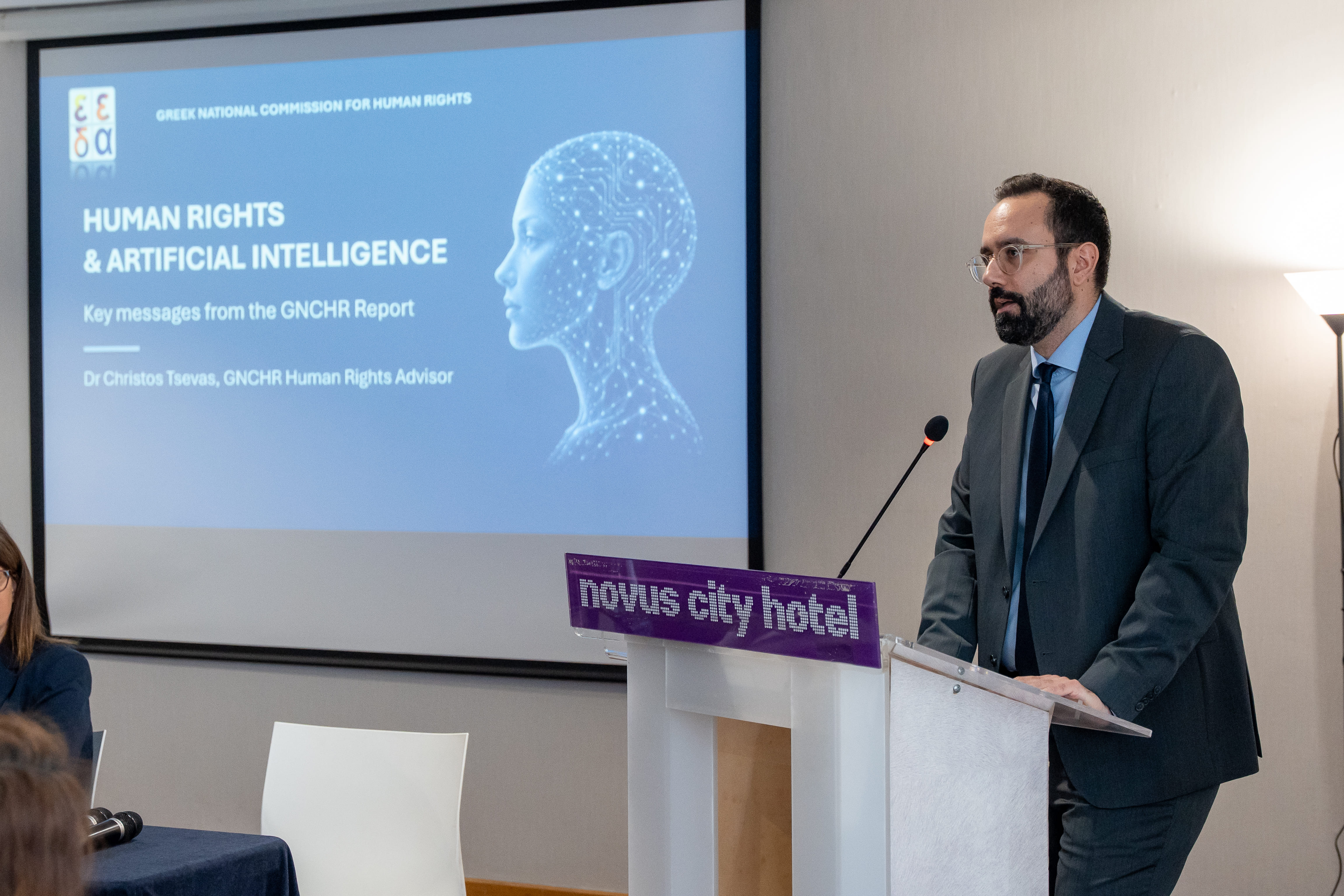
Professor Ignacio Cofone, Professor of Law and Regulation of AI at the University of Oxford delivered the keynote address, “What we get wrong about trusting Artificial Intelligence”. Dr Christos Tsevas, Human Rights Officer at the GNCHR, then gave the first public presentation of the GNCHR Reference Report on Human Rights and Artificial Intelligence, outlining its main thematic areas and the added value of the GNCHR within the framework of AI governance.
The Conference continued with four thematic panels.
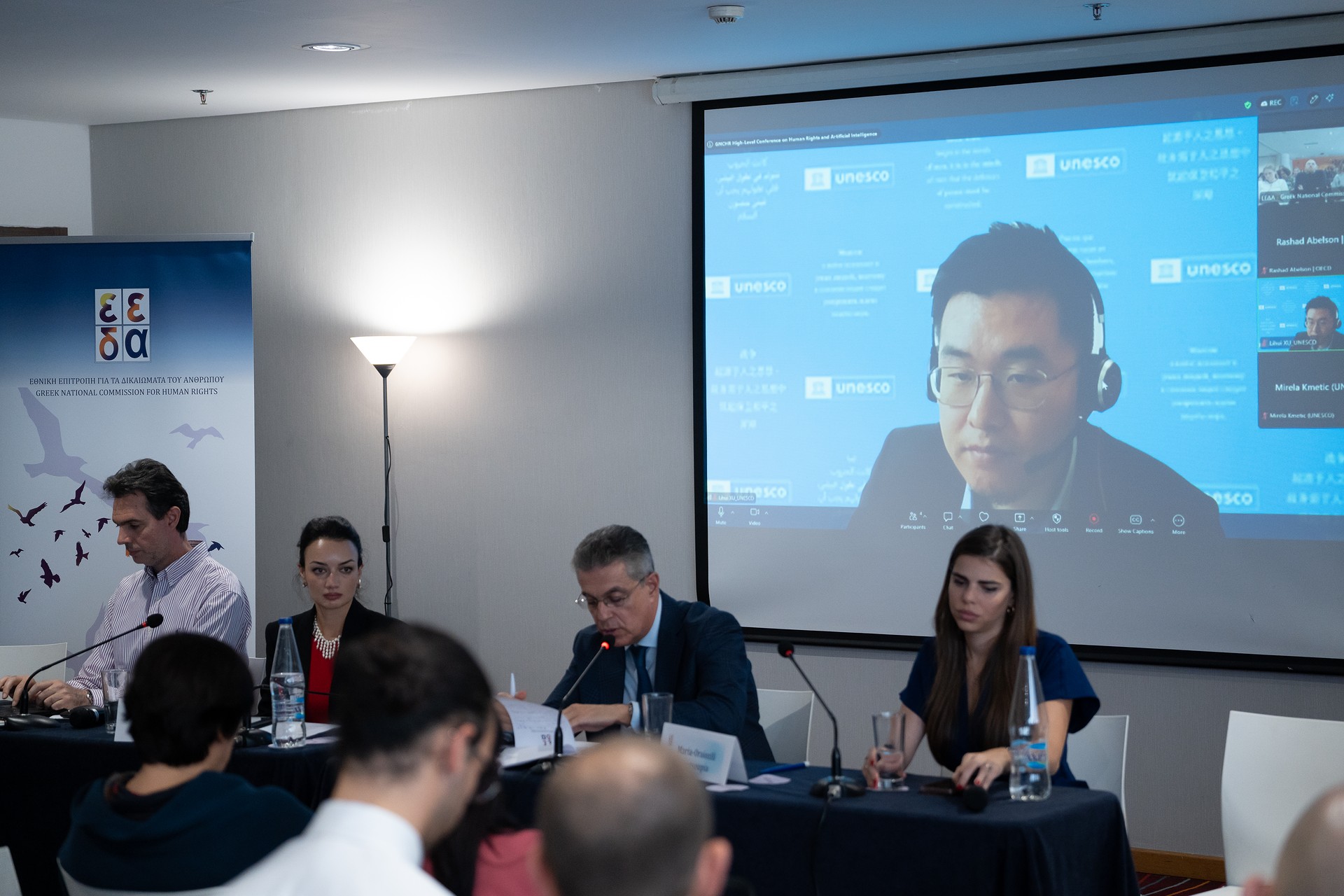
Panel I entitled, “The Contribution of International Organizations: Thematic Analysis, Toolkits and Best Practices”, was moderated by Professor Linos-Alexandros Sicilianos of the Law School of the National and Kapodistrian University of Athens, fm President of the European Court of Human Rights. Ana Tokhadze, Policy Advisor on Artificial Intelligence and Personal Data Protection at the Council of Europe, delivered a presentation entitled, “Applicable Legal Standards for Artificial Intelligence under the Council of Europe Framework Convention on Artificial Intelligence and Human Rights, Democracy and the Rule of Law”. Maria – Oraioszili Koutsoupia, Legal and Policy Officer, Unit A2 – Regulatory and Compliance, EU AI Office, DG CNECT, European Commission, spoke on “The EU AI Office: Implementing the AI Act and Protecting Fundamental Rights.” Rashad Abelson, Technology Sector Lead, OECD Centre for Responsible Business Conduct spoke on: “The OECD Due Diligence Guidance for Responsible AI.” Finally, Lihui Xu, Head of the Ethics of AI Team, Bioethics and Ethics of Science and Technology Section, Sciences Sector, UNESCO, concluded the panel with a presentation entitled, “The UNESCO’s Approach to Ethics in the Age of AI”.
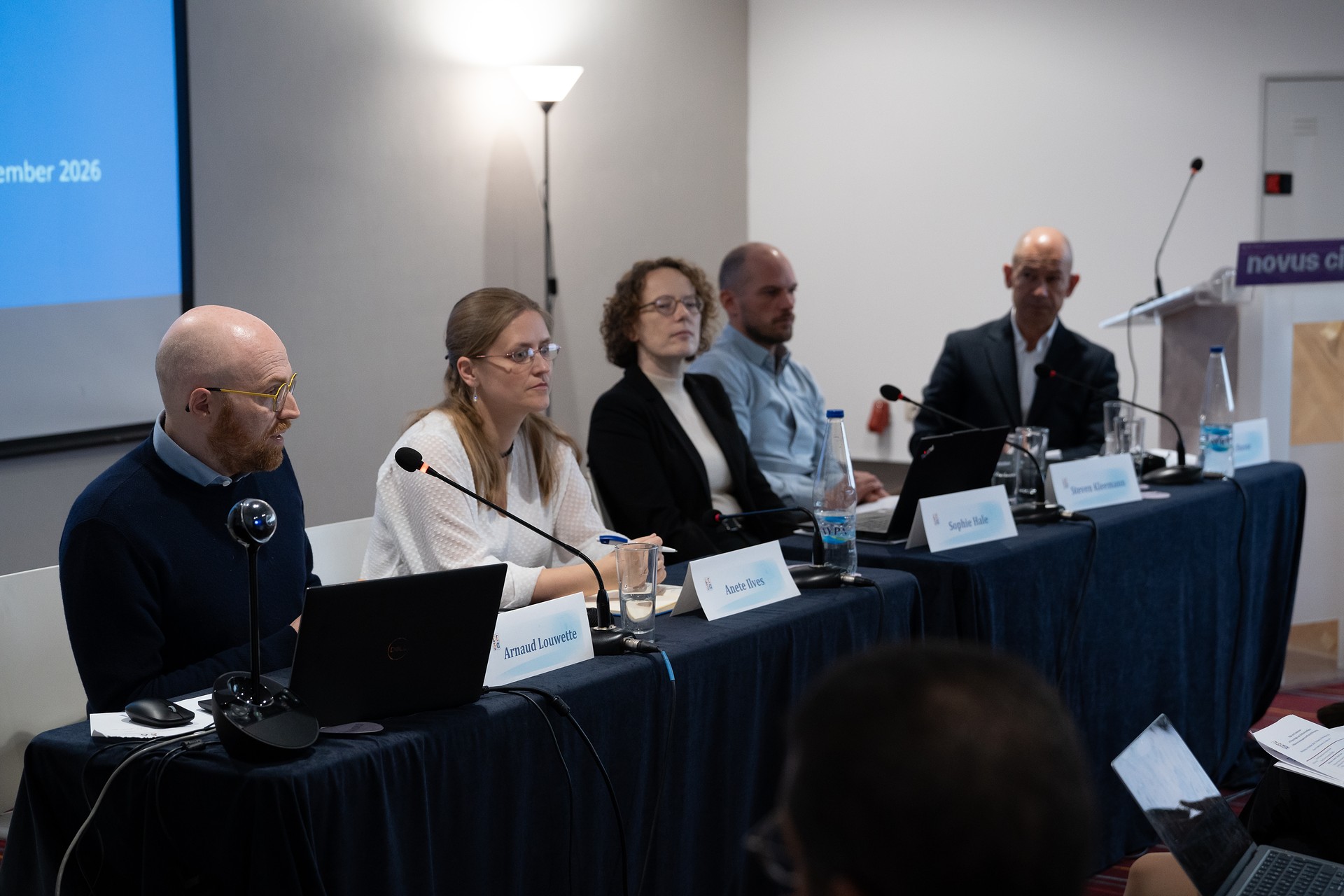
Panel II entitled, “The Role of National Human Rights Institutions: Human Rights Challenges and Added Value,” was moderated by Sophie Hale, Human Rights Officer (capacity Building) at ENNHRI. Johan Busse, Acting National Director, Danish Institute for Human Rights, spoke on “FRIA under the AI Act: moving from principles to practice”. Steven Kleemann, Researcher and Policy Adviser at the German Institute for Human Rights, delivered a presentation entitled, “Who Controls the Police AI?”. Anete Ilves, Advisor in the field of international law and AI at the Ombudsman’s Office of the Republic of Latvia, and Arnaud Louwette, Legal Advisor, Federal Institute for the Protection and Promotion of Human Rights, Belgium, Co-Chairs of ENNHRI’s AI Working Group, concluded the panel with a presentation entitled, “NHRIs and AI: Navigating the Road Ahead”.
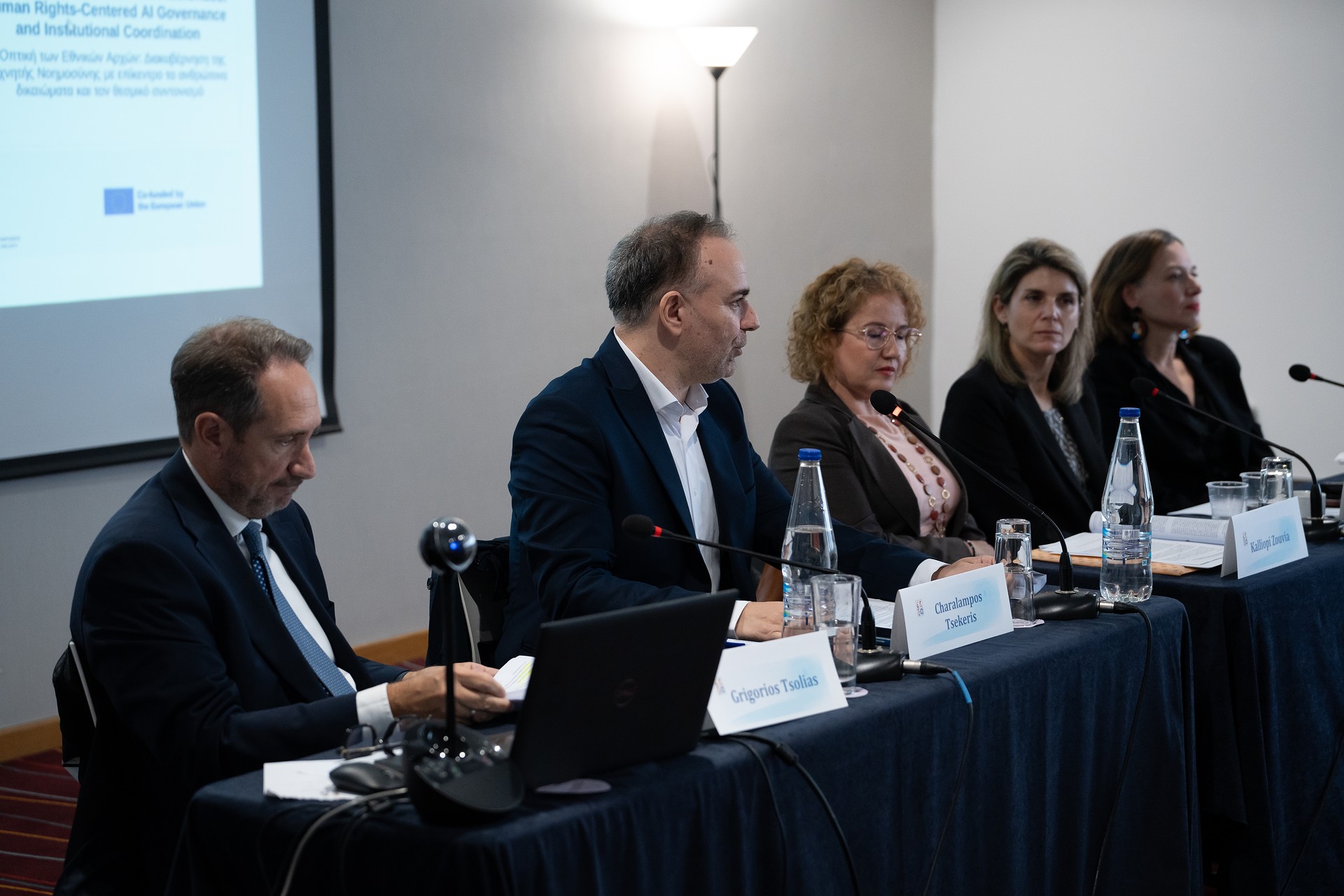
Panel III entitled, “The Perspective of National Authorities: Human Rights-Centered AI Governance and Institutional Coordination”, was moderated by Charalampos Tsekeris, Chair of the National Commission for Bioethics & Technoethics (NCBT). Dr Grigorios Tsolias, Attorney-at-law and Member of the Hellenic Data Protection Authority, spoke on “The Supervisory and Sanctioning Powers of the Hellenic Data Protection Authority in Ensuring the Application and Enforcement of the AI Act”. Dr Afroditi Kousouni, Attorney-at-law at the Hellenic Authority for Communication Security and Privacy (ADAE), presented “The Hellenic Authority for Communication Security and Privacy as an Authority under Article 77 of the AI Act and Institutional Coordination with the Supervisory Authorities under Law 5321/ 2026”. Kalliopi Zouvia, Senior Investigator at the Greek Ombudsman, addressed the topic “Artificial Intelligence and Human Rights: The role of the Ombudsman in the digital age.” Finally, Ioanna Choudalaki, Head of the Digital Services and Other Digital Issues Directorate at the Hellenic Telecommunications & Post Commission (EETT), concluded the panel with a presentation entitled, “The role of EETT in the AI governance ecosystem: Contributing to citizen protection and supporting innovation”.
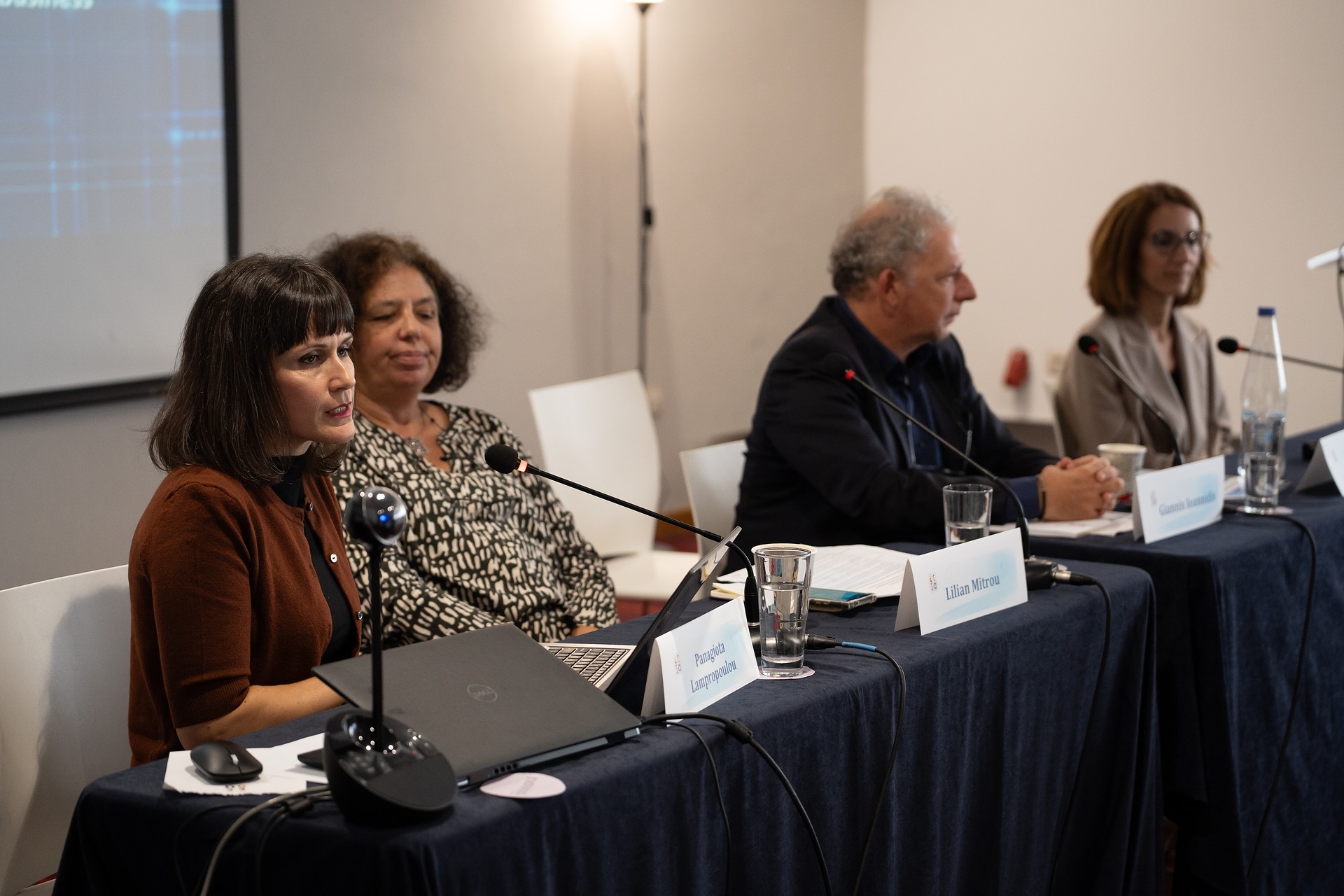
Panel IV entitled, “Multi-sectoral Approach: Civil Society, Research Centres, and the Private and Academic Sectors in Dialogue”, was moderated by Giannis Ioannidis, First Vice President of the GNCHR and Attorney-at-law. Professor Lilian Mitrou, Professor of the University of the Aegean, Attorney-at-law, spoke on “Harnessing the Potential of Artificial Intelligence while Safeguarding Fundamental Rights and the Rule of Law”. Panagiota Lampropoulou, Executive Director of the United Nations Global Compact Network Greece, delivered a presentation entitled “Artificial Intelligence & Responsible Business”. Finally, Dr Dora Katsamori, Associate Researcher at the Institute of Informatics & Telecommunications, NCSR “Demokritos”, concluded the panel with a presentation entitled, “Children as Active Digital Citizens: From Protection to Empowerment.”
The Conference was closed by the President of the GNCHR, Professor Maria Gavouneli, presenting the main conclusions of the day.
See the detailed Conference programme here
Read the GNCHR Report in Greek here and in English here
The event was held within the framework of the project “Advancing Human Rights in the Age of AI NHRI Cooperation, Capacity Building and Policy Dialogue” co-funded by the European Union (Project SGA-CERV-2026-07) through the European Network of National institutions for Human Rights (ENNHRI).
The press release in pdf format
Photo Credits: George Spanopoulos